
Welcome to Colombia!
Reliable thermals, long flying days, and a friendly place to build airtime and XC skills.
Trip at a glance
Dates: Arrive Saturday, Feb 6, 2027 (no later than 6 pm) and depart Sunday, Feb 14, 2027: 8 nights, 7 flying days (Feb 7–13).
Price: $2,999 per pilot
Deposit: $500 to hold your spot, refundable before January 1, 2027; non-refundable after January 1, 2027.
Pilot level: P2 and up. Requirements: P2 rating with a minimum of 30 flights (towing or mountain flights). A radio and a vario are required. A satellite tracker such as a Garmin inReach is highly recommended.
Included: lodging · airport transfers · rides from the landing zone back to launch · personalized instruction and XC guiding · end-of-day flight debriefing
Why Piedechinche, why February
February is one of the best times to fly in Colombia, with typically reliable thermals, long flying days, and excellent opportunities to improve your soaring and XC skills. Piedechinche is especially well suited to P2/P3 pilots looking to build confidence, gain airtime, and experience flying at one of the world's most popular paragliding destinations.
The numbers back it up. December through March is the Cauca Valley’s main dry season and the most reliable flying of the year.
Where it is
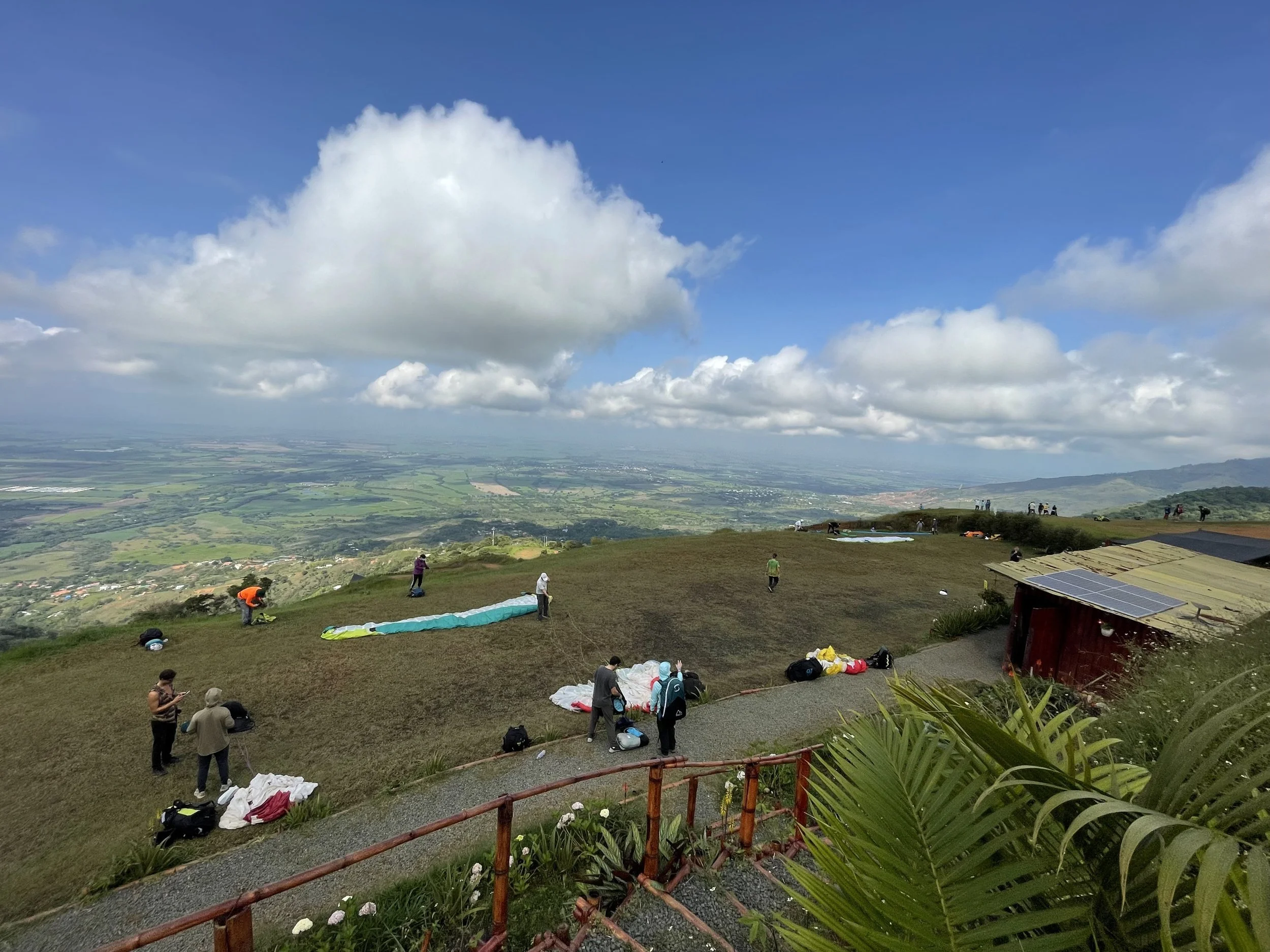
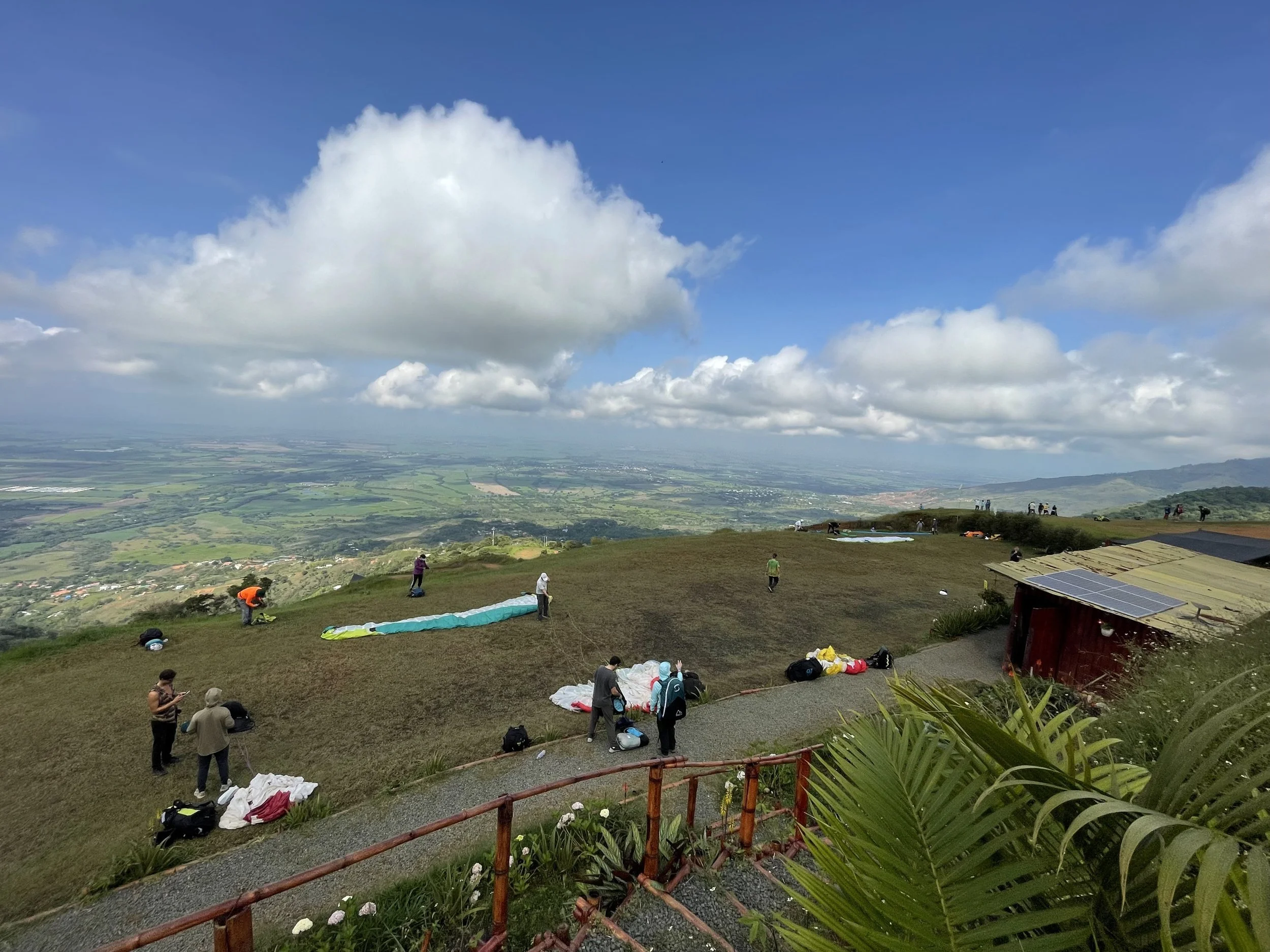
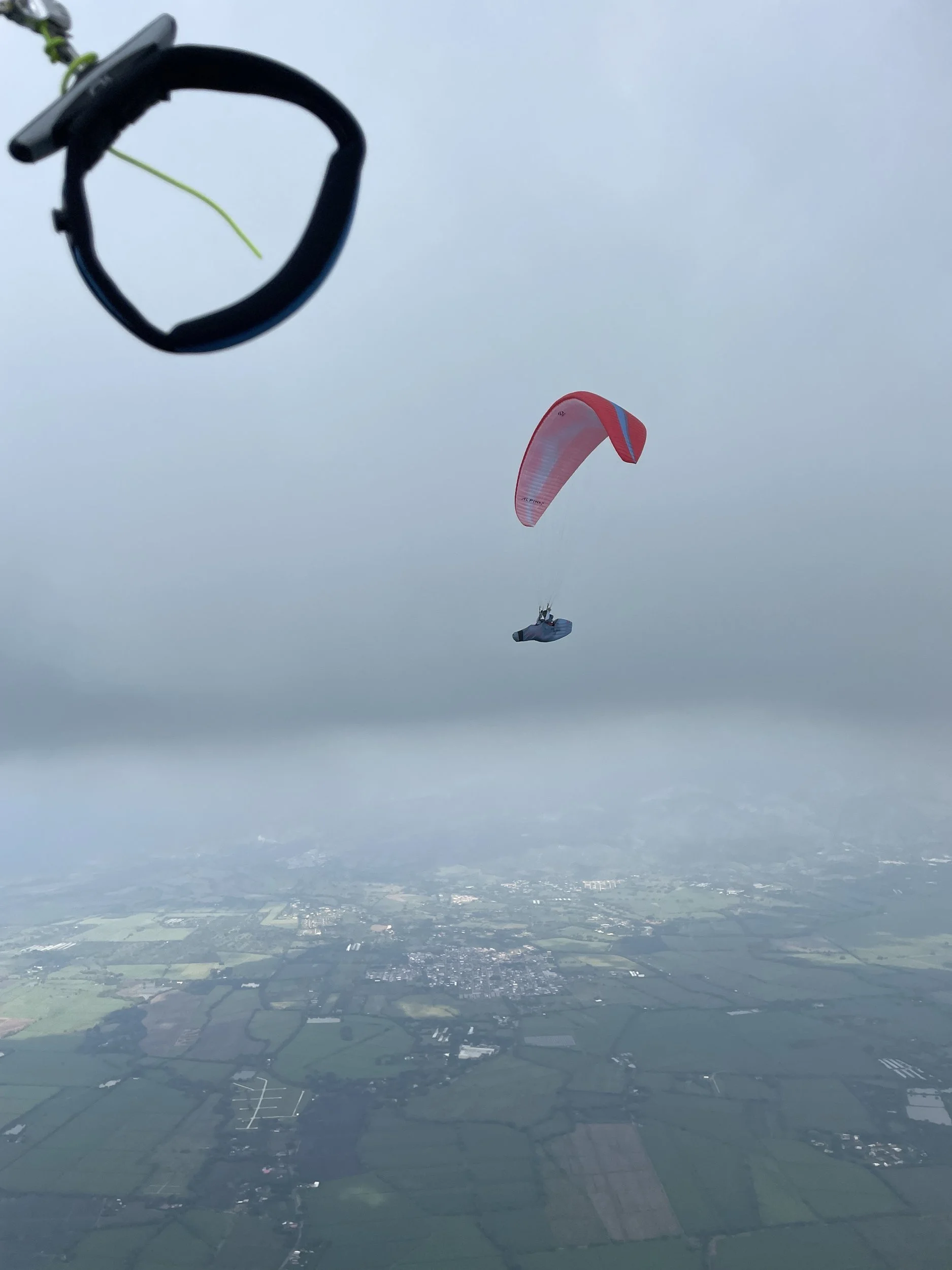
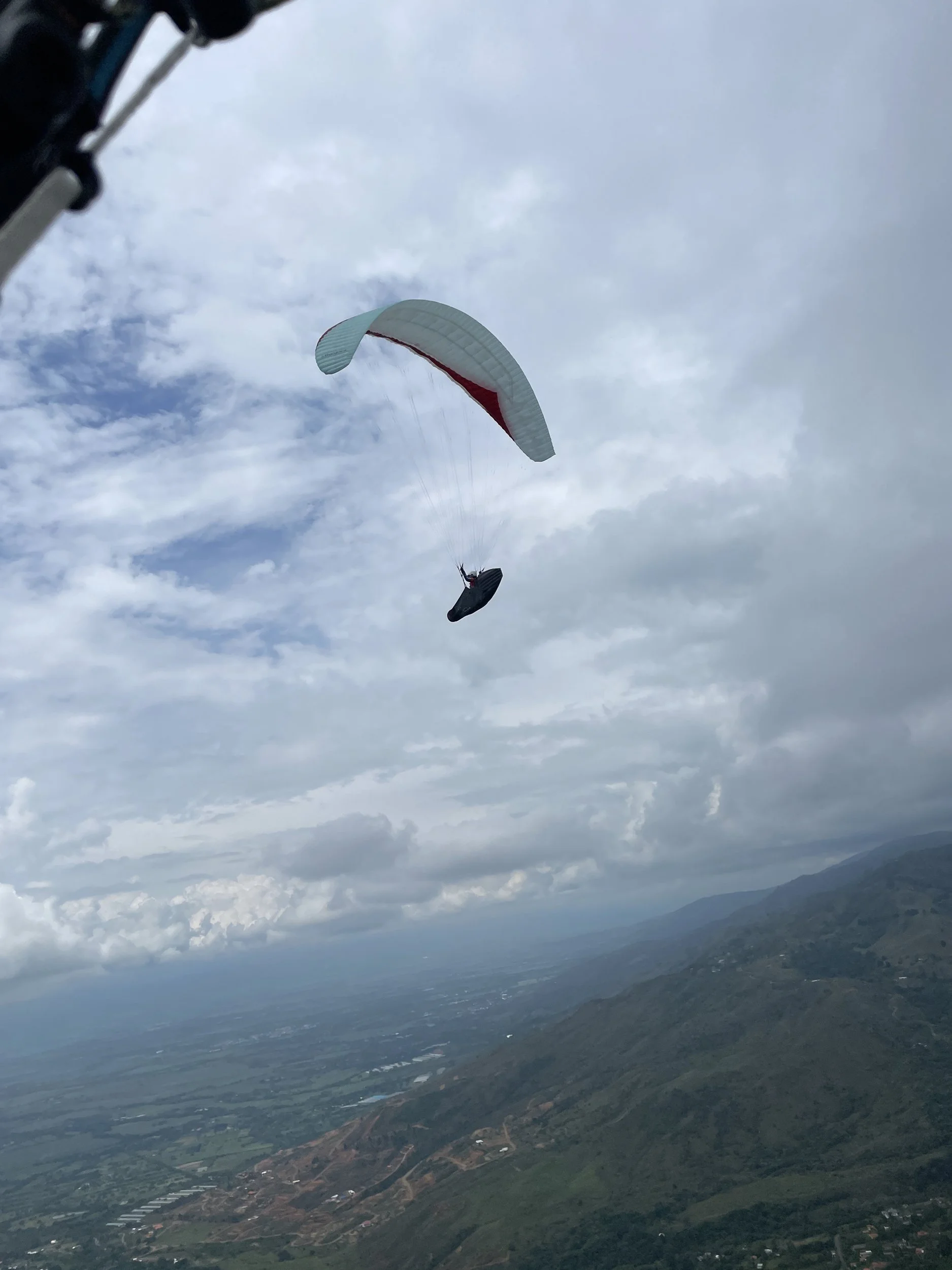
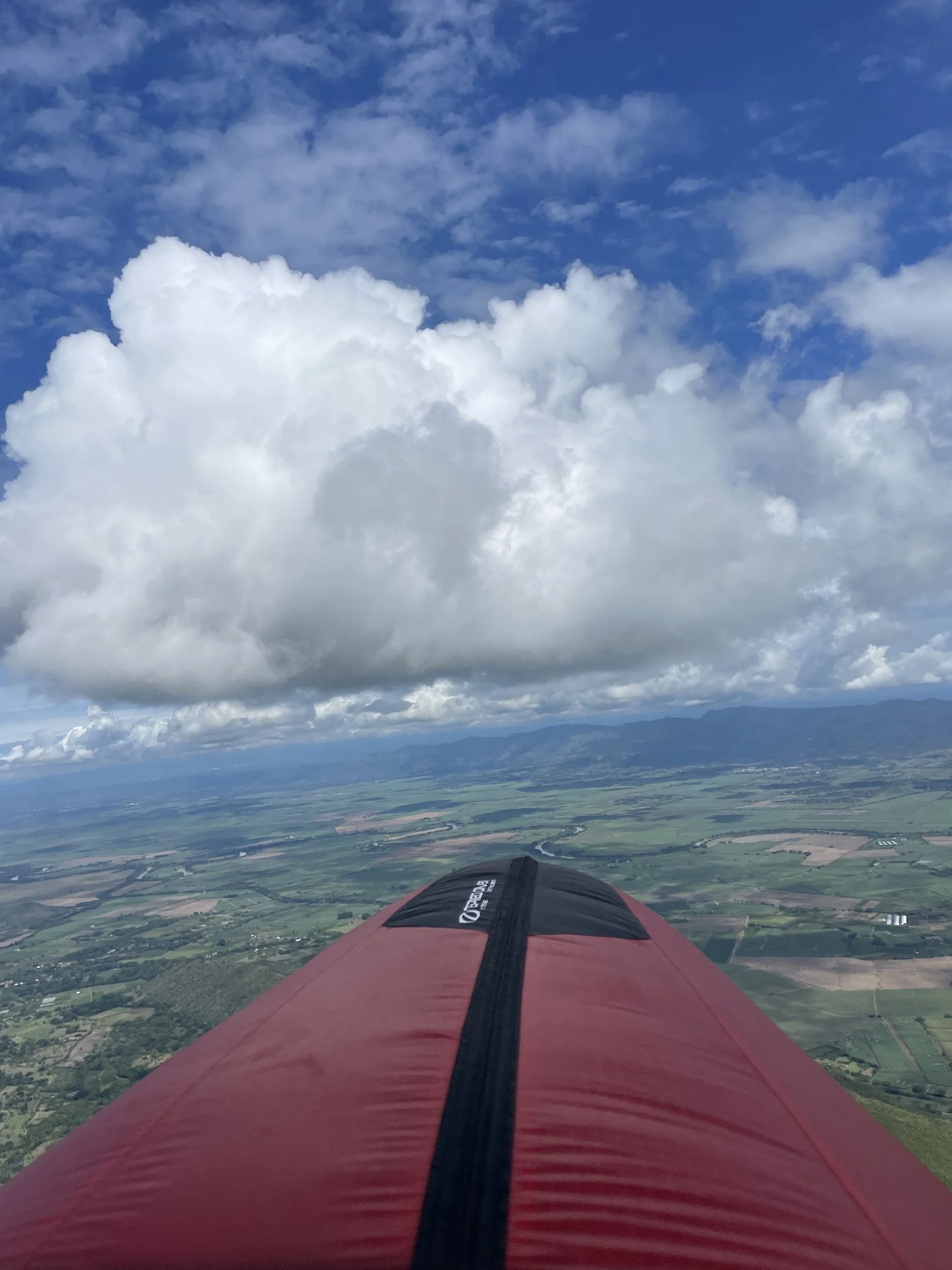
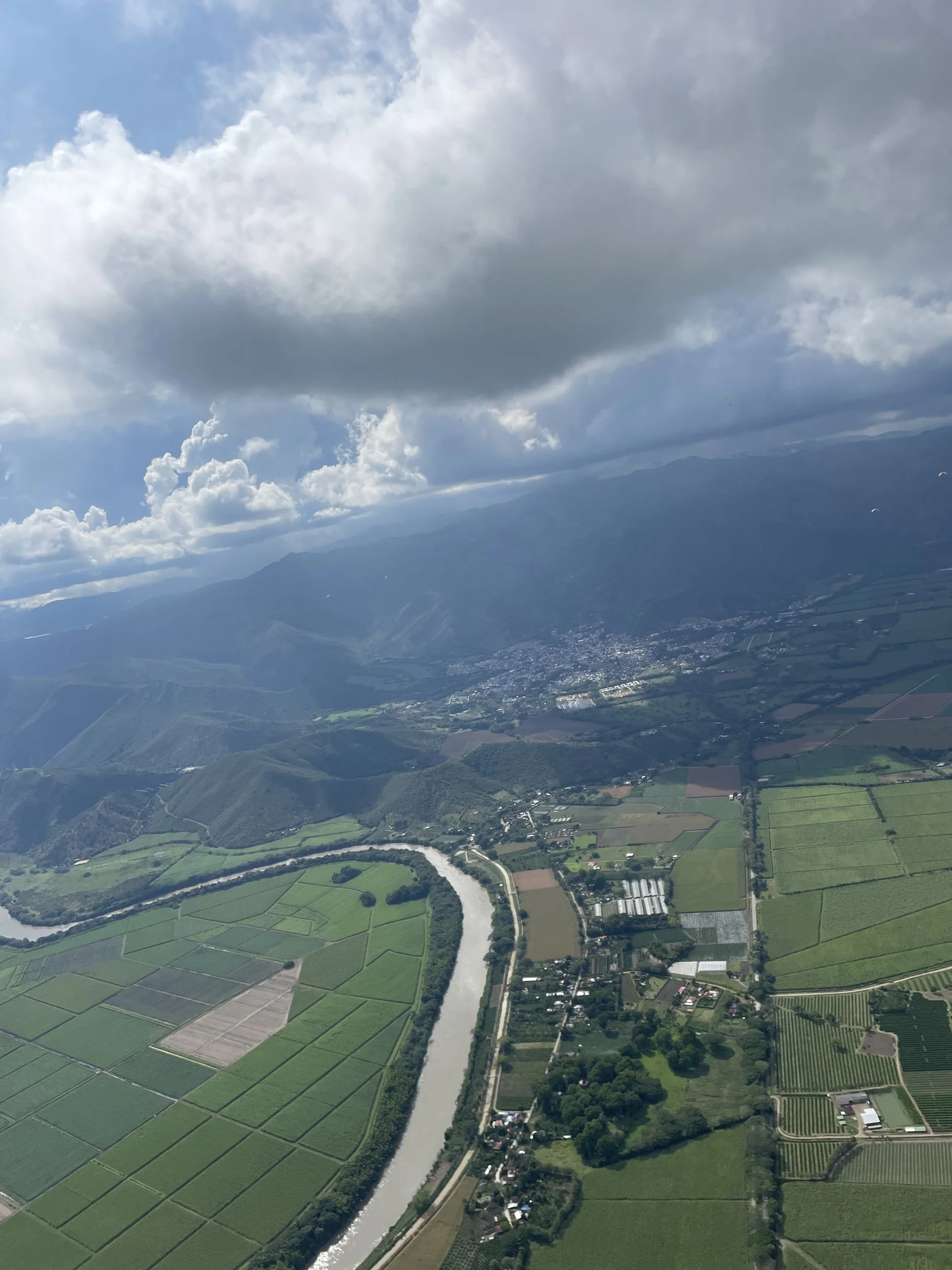
Piedechinche is in the municipality of El Cerrito, in Colombia's Valle del Cauca department. The launches sit on the western slope of the Cordillera Central and look out over the wide, green Cauca River valley and its sugarcane fields. The site takes its name from the historic Hacienda Piedechinche, home of a sugarcane museum, near the El Cerrito creek. The flying area lies between Cali to the south and Tuluá to the north; Buga and Palmira are nearby.
The flying
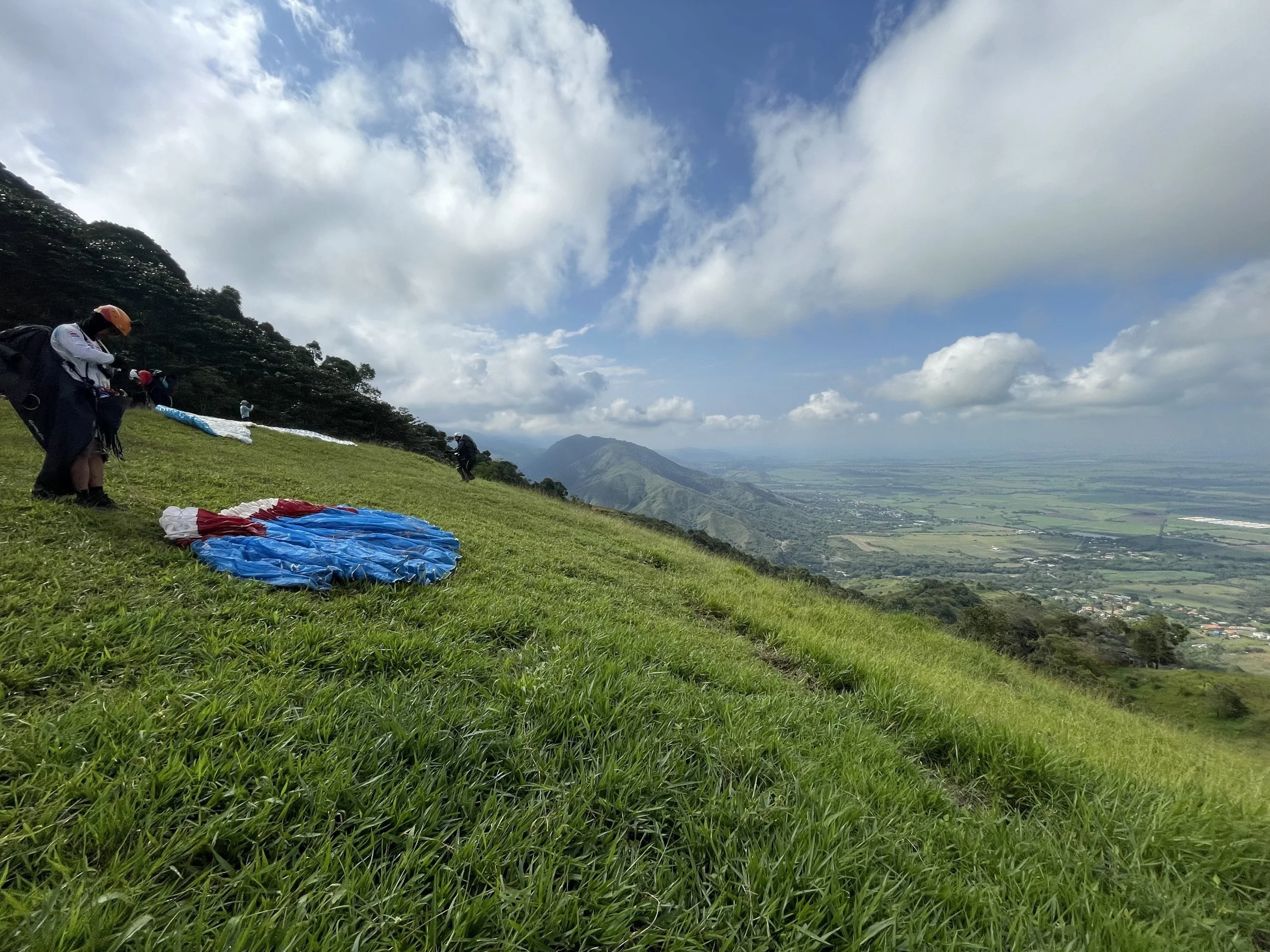
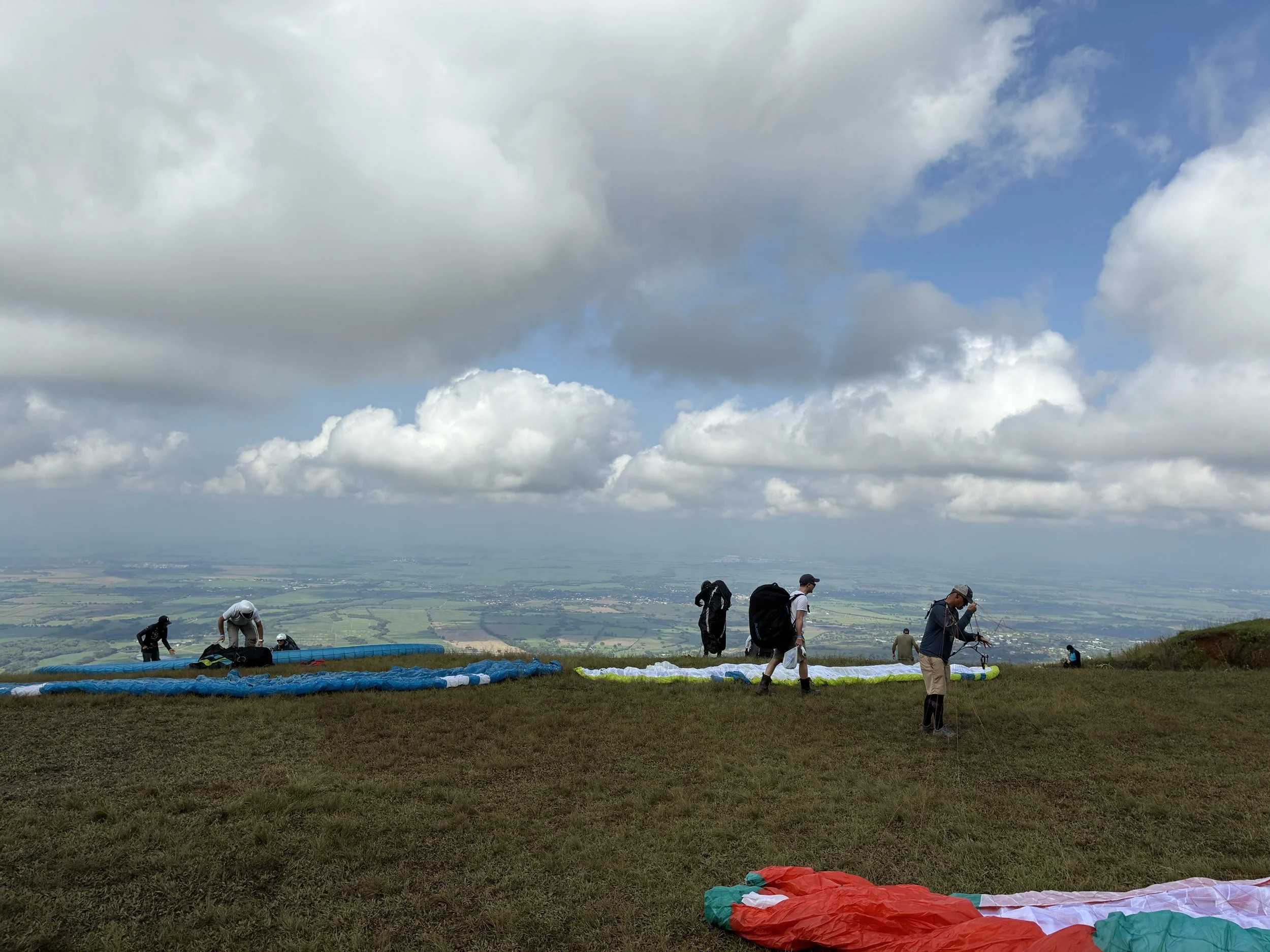
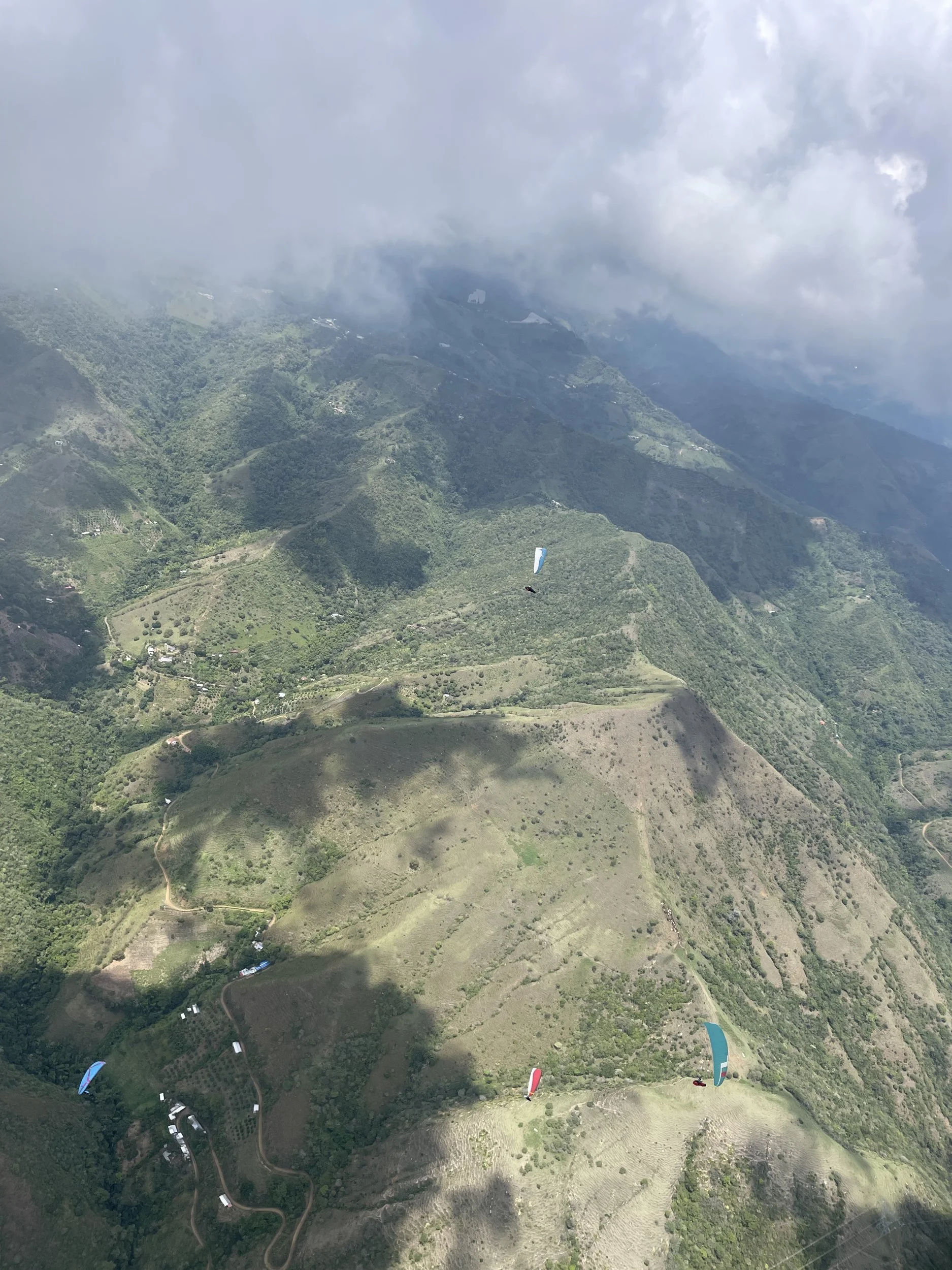
Launches: We fly from two launches, El Siete and Los Perros. Both are big, grassy launch slopes reached by dirt road; the last stretch needs a 4x4, which is why we travel by jeep.
Check-in: Pilots check in at the main entrance desk with their passport number, USHPA number, phone number, and payment, and receive a color-coded wristband for the day.
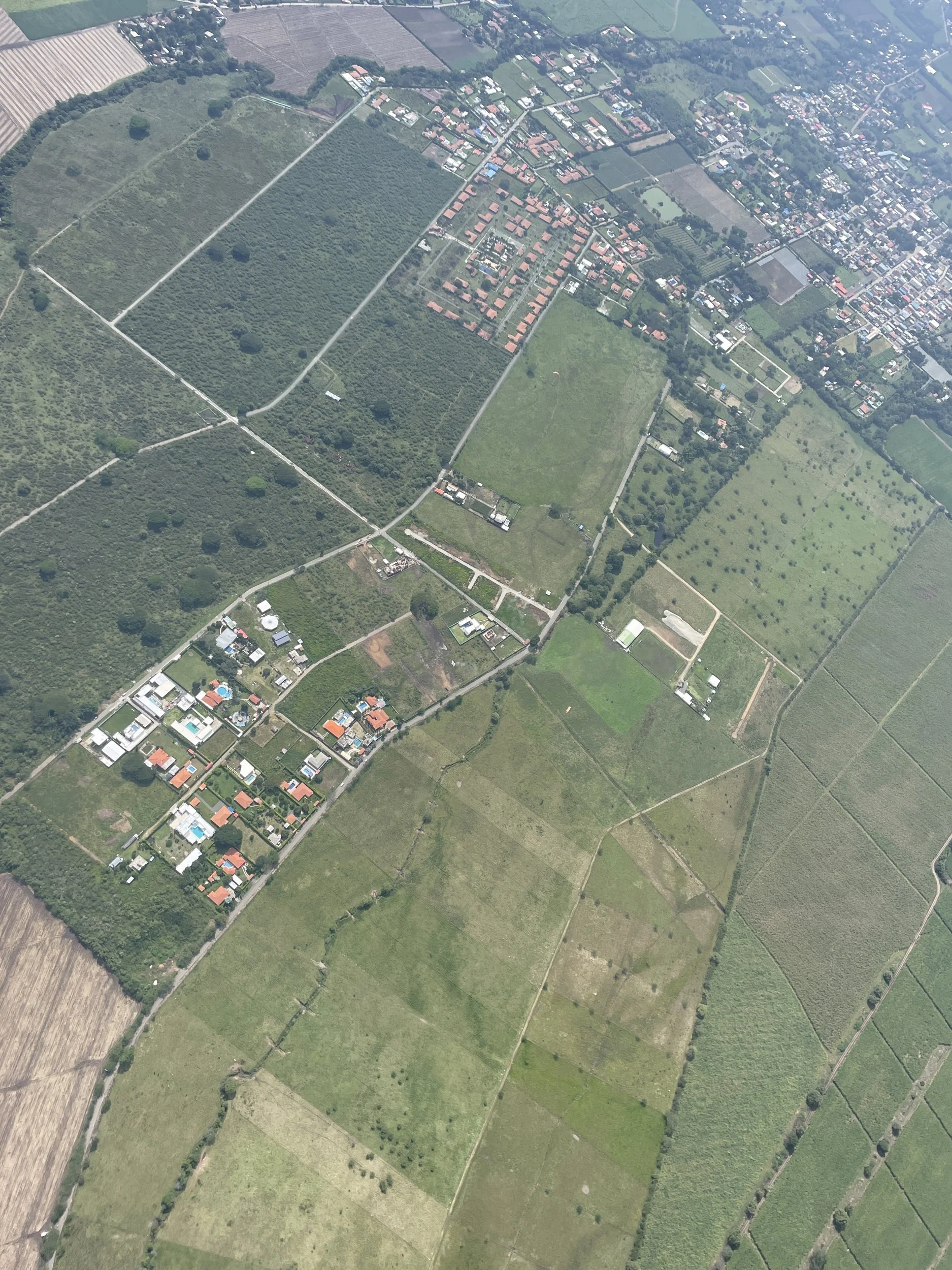
Landing zone: A large, flat official LZ at about 1,150–1,170 m (3,770–3,840 ft), roughly 600–700 m (1,970–2,300 ft) below launch, with a pilot café across from it. There are also landing options near the village of Santa Elena.
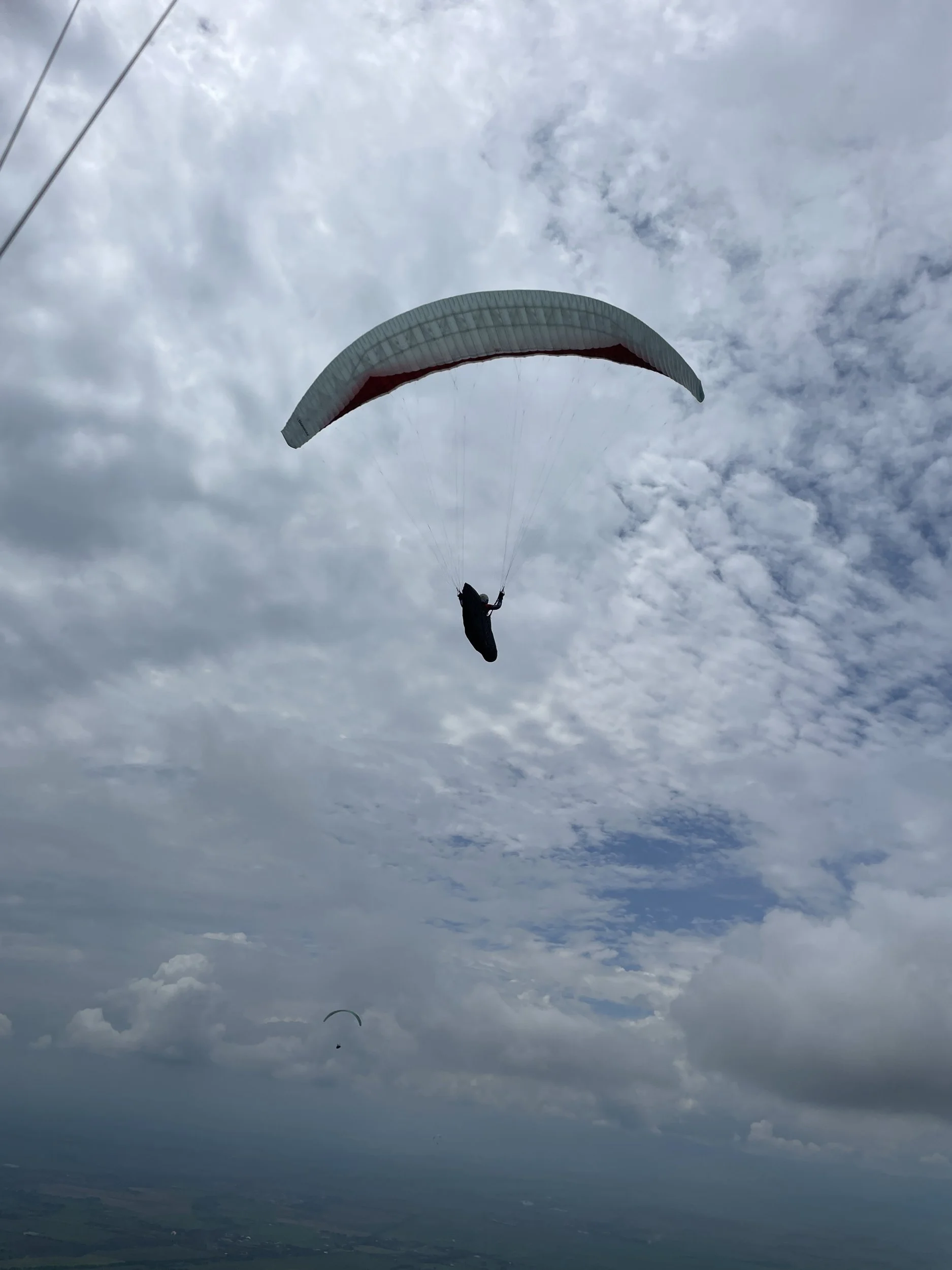
Conditions: Pilots describe the thermals here as gentler and more forgiving than at stronger Colombian sites. Flying often starts around 10–11 AM and can continue well into the afternoon, with a "house thermal" in front of launch and easy, short XC options toward Santa Elena. In recent seasons the average launch time on XC days has been just before noon.
XC potential: Once you're comfortable, classic routes run north along the ridge and valley toward Costa Rica (the town) and Buga/Tuluá, or out and back toward Palmira. On big days in January and February, experienced pilots have flown well over 100 km (62 mi) from here.
Airspace: Piedechinche sits right next to Cali’s controlled airspace, so we only fly inside the designated paragliding zones, each with its own ceiling. Every morning’s preflight briefing covers the weather, the zones and ceilings, and the day’s plan. Load the airspace file into your vario before you arrive.
Who it's for
This trip is for P2 pilots and up. It's a great step for P2s ready for their first thermal and XC trip abroad, and for P3s looking to log hours, sharpen thermalling, and try their first longer cross-country flights. As on all PGNE trips, we review your flying background before the trip and coach each pilot toward personal goals during the week.
Requirements: P2 rating with a minimum of 30 flights (towing or mountain flights). A radio and a vario are required. A satellite tracker such as a Garmin inReach is highly recommended.
Getting there
Fly into Cali, Alfonso Bonilla Aragón International Airport (CLO). It sits between Cali and Palmira in the middle of the Cauca Valley. Airport transfers are included. Arrive in Cali no later than 6 pm on Feb 6. On Feb 14 we provide early-morning transport to Cali airport; book your flight home from there.
Getting around: Local transport is by jeep, 4–5 people per vehicle, including daily rides from the landing zone back up to launch.
Where we stay
We’ll share lodging details with everyone who signs up during our pre-trip orientation.
A typical day
Morning: Weather and airspace briefing.
Around 9 AM: Jeeps head up to launch; wait for the day to develop.
Late morning to midday: Launch as thermals turn on; guides on launch and on the radio.
Afternoon: Soaring, thermalling drills, or a guided XC task matched to your level; land at the official LZ or out in the valley.
Back to launch: Jeep rides from the LZ for another flight when conditions allow.
Evening: End-of-day debriefing to review the day’s flights.
What's included
Lodging (8 nights)
Airport transfers
Rides from the landing zone back to launch (jeeps, 4–5 people per vehicle)
Personalized instruction and XC guiding
End-of-day flight debriefing
Not included
Airfare to Colombia and back
Meals and drinks
Launch fee (paid locally): 20,000 COP (about US$6, depending on the exchange rate) per pilot per day (2026 rate)
Travel medical and evacuation/repatriation insurance covering paragliding
FAQ
What rating do I need?
P2 minimum.
Which airport do I fly into?
Cali, Alfonso Bonilla Aragón International (CLO). Airport transfers are included. Arrive in Cali no later than 6 pm on Feb 6. On Feb 14 we provide early-morning transport to Cali airport; book your flight home from there.
Are meals included?
Meals aren’t included. Piedechinche is a popular spot for visitors, with plenty of cafes and restaurants nearby.
What gear do I need?
Your own glider, harness with back protection, reserve, radio, and a vario with GPS (phone apps OK). Bring your own gear; rentals are not available. A satellite tracker such as a Garmin inReach is highly recommended.
Do I need insurance?
Required: every pilot must have travel medical and evacuation insurance that covers paragliding. Not sure what to buy? See Cloudbase Mayhem’s insurance guide for which coverage to get and how it works.
Do I need a local permit or license?
USHPA membership is required.
What's the weather like?
February falls in the main dry season. Plan for warm days in the valley; launches are cooler at altitude.
How big is the group?
Groups are limited to 8 pilots.
Can a non-flying partner come?
Yes, non-flying partners are welcome. The price for a non-flying partner is $1,500.
Is it cash-based?
ATMs are widely available.
Join us in Colombia.
Spots are limited to 8 pilots. Tell us about your flying and we'll be in touch with next steps.